Categories
Media Storytelling II

Checking Off the Boxes

Virginia native, Kelli Nee, has had her struggles in Omaha, but a few key pieces have tied her into keeping her feet grounded in Nebraska. 

“Omaha has been an interesting experience,” Nee said. “I have gone through some of the best and worst times of my life here, but I have grown so much, and I won’t take it for granted.”

The setter was born in Powhatan, Virginia. She had grown up without a father. Her mother had raised three girls with the help of Nee’s grandmother and grandfather. Family had been a huge factor in her decision on where to play collegiate volleyball.

She struggled to find something close to Virginia so that she could remain near to her family. The only problem was that northeastern schools never gave her a feeling of home. 

Image result for kelli nee volleyball

“That’s when I decided to reach out to schools that were farther away,” Nee said. 

Omaha wasn’t her first choice, but when the head coach of the Mavericks, Rose Shires, showed interest in her, she thought it’d be beneficial to at least go on a visit. Her visit consisted of tours of the dorms, weight room, locker room, Baxter arena and a chance at meeting a few of the Mavericks. The Maverick’s culture was undoubtedly different from any other school that she had visited. 

“As soon as I met some of the girls, I immediately knew that this was my home,” Nee said. “The genuine expressions of care and love were shown from the get-go.”

The girls exceeded her standards of what it meant to be Maverick. That was the first box checked off in Nee’s list of what she wanted in a school. 

Nee’s faith was another important factor when deciding where to attend college. Her expectations were high when considering if the girls went to church or had a mentor that they could look to. Nee found that many of the Mavericks went to church on Sunday mornings at My City Church, which was located in the Thompson Alumni Center during her visit. She experienced the service. Following the service, a few of the girls took her to Mike Martin’s, the athletic Champlain for the University of Nebraska-Omaha (UNO). This is where she checked off the second box on her list.

“Instantly, Mike made me feel like a part of his family,” Nee said. “I wasn’t even committed yet and we were having discussions about my future as a daughter of Christ.”

Nee’s final box was checked off after Shires had shown her the route of classes she would take into becoming a molecular and biomedical biology major. School was another key factor when considering colleges.

“Volleyball isn’t forever,” Nee said. “Eventually I’m going to have to get a job, and Omaha focused solely on proving to me how they were going to get me the most prepared for that time.”

Nee found that academics, faith and culture were the most important concepts in choosing a college. When Omaha checked off all three boxes, she knew it would be home. 

Although Nee believed that UNO was going to be the best fit for her, she ran into trials that set her mind on transferring before her freshman year was complete. 

“I tore my ACL and then a few months later I broke my foot,” Nee said.

Due to injury, Nee was placed on medical leave where she didn’t get to play or travel with her team.

“Honestly, I was talking to my mom and looking into other schools about transferring at semester,” Nee said. “I wasn’t happy having to sit out from playing.”

After a few weeks of sitting out, Nee noticed the growth that she was making in her faith. Because she didn’t have to travel, she had more time for church and going to Mike’s for his Sunday night fellowship. 

“I noticed that I began to place more trust in God because I didn’t know what else to do,” Nee said. “Volleyball had been my go-to stress relief for so long that I was forced out of my comfort zone.”

Her academics were showing her attention to detail, while her GPA remained a 4.0. School was the second thing that she found to be keeping her interest levels in Omaha. 

By finals week, Nee had worked hard at growing closer to the team despite not being around them when they travel. She had more time to plan games and movie nights for the team so that their culture wasn’t disrupted with her absence.

Despite the trials that Nee ran into, she continued to find herself checking off her three boxes. 

“Academics, faith and culture are what got me here,” Nee said. “And they continue to keep me here.”

Word count: 784

Categories
Media Storytelling II

Instagram Assignment

The first Instagram user that I decided to look at was a local reporter, Alexandra Stone of KETV, who uses Instagram to post about the news that she is working on and her travels to exotic places.

She uses Instagram to also post pictures of her from certain areas of her reporting. For example, she screenshots the news of her in the midst of reporting on-air and captions it with something similar to what she was reporting on during that shot.

Her posts rarely have comments, but when they do, they typically compliment her or make a comment about her post from her reporting.

Lauren Taylor, a reporter for WOWT, uses Instagram to post pictures of her dog, raise awareness and her time at the studio reporting with Sharon Chen.

She uses Instagram to enhance her storytelling by posting with other anchors about what they are reporting or when they are reporting, such as her post about delivering news on Labor Day with Sharon Chen and David Koeller: “We’re laboring on Labor Day but loving every second of it! Join us at 10 on @WOWT6news.”

Other Instagram users comment on her photos with compliments like “You ladies rock! We love the wowt 6 news team!”

Another local reporter, Jennifer Griswold of KMTV, uses Instagram to post with her children, exotic places she has traveled to and write her thoughts. Unlike any of the other reporters, Griswold is seen to write more than the average user on her captions. She uses them to describe her goals for 2020, make other mothers feel normal about the questions they have and working out.

On her posts regarding working out, Griswold receives a handful of compliments and pieces of encouragement.

On the national spectrum, Zain Asher of CNN uses Instagram much like reporters on the local level. The only difference between Asher and Omaha reporters is that Asher has more pictures with people of importance, like Barack Obama, Bill Clinton and George Bush.

It seems that her exposure at the national level has helped her get the chance to interview more celebrities and tell stories that apply to viewers from around the country.

Asher has a similar number of comments in comparison to Griswold, Taylor and Stone. Each comment either hands out a compliment or words of encouragement.

Elaine Quijano of CBS News uses Instagram to repost other Instagram posts that she feels her viewers should see, introduce her coworkers and share videos of places that she has visited such as Pingvellir National Park, Atlantic City Boardwalk and the Eastern Market.

Quijano has fewer posts about herself and more posts about the places and faces that she has seen.

Her Instagram followers comment “Love it!” and “So pretty!” on her posts.

On both the local and national level of reporting, I did not find any inappropriate pictures, videos or captions from the reporters which is understandable because they are in the public eye, therefore what they say and do has a longer-lasting impact than people who don’t have to provide news in front of a camera.

Categories
Media Storytelling II

Find a Job You Love

Morning show host at “101.9 The Keg”, Matt Tompkins, visited his alma mater on Monday, Feb. 17, and brought his advice for future Journalism and Mass Communications majors.


The University of Nebraska-Omaha (UNO) graduate had many things to share on Monday. He gave students three keys to be successful in any career field; consistency, quality and resilience.


As a student at UNO, Tompkins worked for MavRadio where he found his love for being on the air with his weekly radio shows. Along with MavRadio, he also noted how he interned at KVNO and KFAB and spent more than 40 unpaid hours each week learning the ropes.


Tompkins emphasized how important it was for him to intern because he was not only able to get a head start at learning how to do imaging and copyright, but he was given the opportunity for paid professionals to listen to his work and give him feedback.


He used his internship as an example to show how important it is for students to do the same.


“Get involved as early as you can,” Tompkins said. “I learned so much more at the stations than I did in the classroom.”


After graduating at UNO, Tompkins shared that he went through several jobs. He had his own television show with his brother, Omaha Live, and provided pitches which he said were “hilarious” for the Omaha Buzz online.


Being in the communications and journalism fields, Tompkins noted how important it was to love your job.


“You have no control over where they throw you or don’t throw you,” Tompkins said.


Tompkins explained that another important part for students to understand is that they would much rather jump around from job to job, like he did, for five years so that they could find the job they love working for for the next 20 years.


“People we work for don’t care if we love it,” Tompkins said. “They’re just trying to make money.”


Tompkins also noted that students should find a way to make money off of their talents, skills and loves because then they will not have to work another day of their life and their bosses will keep them because they will be making money off of what they produce.

Categories
Media Storytelling II

A New Home

Falling into the world of ice skates and hockey pucks, Tyler Weiss has been across the world and all over the country just to find his home at the University of Nebraska-Omaha.

Weiss began his hockey career at the age of five and has traveled to over 30 states and two countries to play the game. As a 16-year-old in the United States Hockey League, Weiss knew that he had found his calling in the realm of ice. 

Image result for tyler weiss
Tyler Weiss celebrating after a goal against North Dakota. Photo courtesy of Mark Kuhlmann.

The USHL had given him the opportunity to travel to states outside of his hometown of Raleigh, North Carolina so that he could get noticed by an organization of the National Hockey League. He did just that.

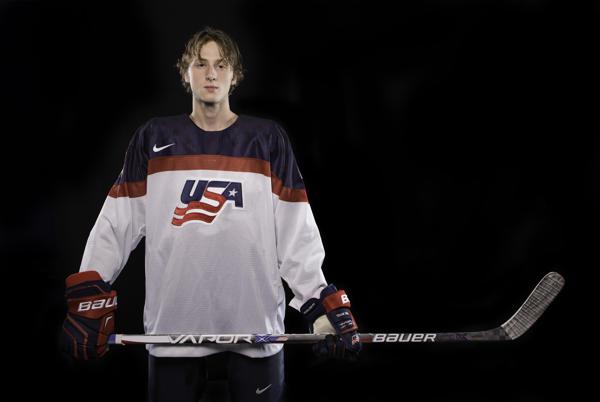
Around the time of his second season in the USHL, Weiss had been invited to play for the Youth Olympic hockey team at 17-years-old. His trip to Norway where he earned a gold medal in the Youth Olympics was where the Colorado Avalanche solidified their position on him.

Image result for tyler weiss
The 109th pick of the 2018 National Hockey League Entry Draft, Tyler Weiss, celebrates by putting on Avalanche cap. Photo courtesy of Bruce Bennett.

“They told me they loved the way I played the game, but they had an issue with my size,” Weiss said.

The 5-foot-10 forward weighed 140 pounds at the time of the Youth Olympics. Scouts had noted how he was too small to make it to the NHL unless he bulked up at a college. Weiss knew his dream of becoming a pro wouldn’t happen without a pit stop at a university that could get the job done.

The road to becoming a draft pick was complicated. Weiss planned to play at Boston University. This was one of the first schools to offer him, and they had given him a deadline on whether he wanted to commit to their school or not. As a 17-year-old with a professional team at his heels, he gave in before realizing the program did not have enough room to bring him in for the 2018-2019 season.

He was told that he’d have to play another year in the USHL before he could attend Boston University, but that conflicted with the statements that the Avalanche had given him.

“The Avalanche told me that going to college was going to be the best thing for me because the game is faster and a lot less physical,” Weiss said.

Weiss began the hunt for the perfect college, again.

After a visit with the head coach of the UNO Mavericks, Mike Gabinet, Weiss knew that Omaha was the place for him.

Image result for tyler weiss
Tyler Weiss posing for his Youth Olympic head shot before heading to Norway. Photo courtesy of Becky Olsen.

“I picked Omaha because they’re in the best and toughest hockey conference that there is to offer,” said Weiss. “Other than that, I love that it’s fairly close to home and the coaching staff.”

Weiss noted that the coaching staff had been there for him when he was going through family troubles, and he loved that they always kept tabs on him no matter where he was in the country. 

Baxter Arena was another reason why he found Omaha to be a perfect fit.

“It’s definitely one of the best rinks in the conference,” said Weiss.

After arriving in Omaha, he found that the only downfall is the weather being different from that of his hometown. 

“The weather here is a lot more depressing than Raleigh,” said Weiss. “It’s super dark here, but when the sun is out I have no complaints.”

Weiss was excited about the opportunity to play in Omaha because he could focus on putting on muscle while strengthening his game. Omaha also offered him the chance to play in the best college hockey conference, National Collegiate Hockey Conference, and remain a draft pick.

“College hockey is a stepping stone, where you develop for the team that drafted you,” Weiss said. “And I’m so glad I picked Omaha to help me out.”

Word count: 621

Categories
Media Storytelling II

Jean Stothert Press Conference: Road to Recovery

Mayor Jean Stothert held a press conference on Thursday, January 23 to announce a $200 million bond issue with a 5 year issuance to repair the roads of Omaha that have been, what she said, “50 years overdue”. 

Stothert noted that she doesn’t want to raise taxes, but she wants the voters to decide whether or not they want the rehabilitation, reconstruction and repair of the streets of Omaha. The most that a taxpayer would have to contribute would depend on how much their house costs, so if one had a $100,000 house then they would have to pay a short tax of $35 a year. 

The past 50 years, the streets of Omaha have been underfunded by a total of $34 million. A deep dive evaluation found that the city of Omaha should use $75 million annually for 250 lane miles, but instead, Omaha is using $41 million for only 125 lane miles annually. 

“That causes a $34 million shortfall,” said Stothert. 

By funding $40 million each year for the next 5 years to cover the shortfall, taxpayers could see the conditions of their roads improve. Every lane in Omaha could be resurfaced. 

Stothert also said that this bond could be secured without a vote, but because of the taxpayer dollars that would be needed for this issue, she would like to let it be voted on.

The revenue options include an increase in wheel, property or sales tax.

“We will never catch up and the funding gap will increase,” said Stothert when considering a vote against the repair of Omaha lanes. 

With the winter and summer of 2019, Stothert said they spent “over $13 million in potholes”.

Every year, the streets of Omaha are getting older. 

“12 million dollars [were used] this year in resurfacing,” said Stothert. 

With the help of this $200 million bond issue, the streets could match the potential of the city. If the bond passes, taxpayers could see the results in 5 years and then vote on whether or not they would like it to continue and if it was worth their taxpayer dollars. 

“[We’re] wasting taxpayer money by what we are doing right now,” said Stothert. “It is just a band aid solution.”

  1. Would the construction of these paved roads be another problem of Omaha traffic?
  2. What would the repair process look like?
  3. How long would the reconstruction of roads like Dodge take place?
  4. And during what time of year would the reconstruction of those roads take place?
  5. After 5 years and if the bond got passed again, would certain streets have to undergo rehabilitation again if they met certain standards? Would every street that got repaired during the first round of reconstruction get repaired again? Or would some have the ability to be exempt depending on their conditions?
Categories
Media Storytelling II

The Gateway Review

As an entirely student-operated and run newspaper, The Gateway has given students a handful of opportunities to be successful. The Gateway is 107-years-old and has professional oversight from a publications board. They also have a professional advisor from the Omaha World Herald. These connections are used to make sure that everything they are printing is done correctly, while also giving students a professional resource. Students use their work done at The Gateway to get jobs with marketing agencies, Omaha magazine, Omaha Performing Arts, UNO and HDR for internships. Going back to their beginning stages, The Gateway started as yellow sheets that were used to get support for student organizations and athletics, but they now offer more than just those options. The newspaper offers a voice for students while being autonomous. Cameron, Lita, Mars and Grant gave an overview on the newspaper. One noted that the newspaper has student writers and applied journalism students. They also have contributors at various capacities. A typical week involves a production Sunday where they put everything together. Grant noted it was basically a social hour because they have a lot of fun while they are combining their work. The Gateway is published every Tuesday, and the print edition brings in 85% of their advertising revenue. On the other hand, their website is updated daily and offers news as it breaks. The students of The Gateway do more than just write. They also have their annual book drive at Jackson Elementary to promote literacy and have partnerships with the alumni to honor outstanding works at the Gateway’s Excellence awards. One student noted that it is a learning laboratory for students. It offers a place for students to use their voice because it is not run by the school. With that being said, administration cannot tell you what you can and can’t publish like they have the ability to at Creighton because it is run by the school instead of the students. The newspaper is an extremely important part of the community at the university, and if one has the opportunity to, they should get involved.

Word count: 349

Categories
Media Storytelling II

Live Tweeting

Live tweeting is an interesting thing. It can bring someone out of their comfort zone, but it can also give someone a sense of involvement to be tweeting about something that they are passionate about while seeing that others are just as passionate. For me, I loved the idea of tweeting like I am a reporter. I have always wanted to report, especially sports coverage. By tweeting live along with hundreds of other viewers, reporters and fans, I felt a sense of excitement because it gave me the opportunity to not just do the assignment for the class, but practice something that I could eventually do one day. For the first portion, I was pretending to be a reporter and tweeting information that others may find valuable. Towards the end, I didn’t have to take on a role. I was tweeting what I thought was interesting. I also enjoyed getting to see other classmates posts. Some of them were super creative and funny, and I kept questioning why I hadn’t come up with a tweet like that. On the other hand, at times it was hard to think of what to say. It was hard to try to write a good tweet that others would find interesting. We all have been through the twitter-scroll of rolling right past tweets that we didn’t think we would find interesting, even if we only read the first few words. I didn’t want mine to be scrolled through at such ease. I wanted to create a tweet that someone would laugh at or even think “I was just thinking that”. I learned that live-tweeting events are beneficial for those who are unable to view what is being tweeted about. I enjoyed this process.

My Twitter handle is @alexa_blase.

The link is https://twitter.com/alexa_blase.

Categories
Media Storytelling II

Welcome Fellow Athlete Lovers

Within this blog, you can expect to see a handful of different topics that all relate to a general idea of sports. During the upcoming weeks, I will be interviewing 8 student-athletes that all have one thing in common: being from out-of-state. I will discover why they chose Nebraska and what makes Nebraska different than their home state. I plan to use writing, photo, audio and video to interview the student-athletes.

Design a site like this with WordPress.com
Get started