Categories
Media Storytelling II

Jeremy Maskel and Maggie Cunningham Recap

Former Channel 7 reporters, Maggie Cunningham and Jeremy Maskel, have experienced the reporting world before taking their efforts to Omaha Public Schools. 

With the pandemic that we are in right now, Cunningham states that it would be difficult trying to find an original angle for an exciting story. The pandemic is everywhere. From news stations to newspapers to billboards, COVID-19 is taking its toll in the news. Cunningham noted how it would be difficult to get community members to speak with them but one would have to find their own original perspective to create something that viewers would want to hear and see. 

Maskel also noted that this pandemic shows how important relationships are during this time. There really is no sub whether you are a reporter or communicator. This pandemic is hitting everyone despite their careers, and everyone is trying to find something that reaches the eye of their viewers. 

Now at OPS, Cunningham’s day is different. Whether she is trying to find what she can tell students and families or making sure they know about the FAFSA, SAT and ACT’s, her work is cut out for her. She spends her days at home now, but she is trying to focus on students or teachers that are going above and beyond. 

One thing Cunningham noted that was important for students to have spent time with is the Adobe suite. Working in the communications field, the Adobe suite (Adobe Premiere, Photoshop, Illustrator) is key because she is always trying to make new videos and engaging content for the OPS community.

In that same realm, Maskel found that working at Channel 7 has prepared him greatly for his role at OPS. He favored his journalist skills, and he emphasized that the skills you learn in journalism can serve you and take you far. 

Now that he is on the other end of reporting, he finds that he better understands both perspectives now. He knows what to say in order to get a reporter on the scene, and he knows what is the most important part when the journalist shows up. Maskel notes that relationships are huge in the communications world.

When asked how to create relationships, Maskel said that calling and emailing people within your beat will be important, as well as joining clubs that might introduce you to others that are experts in that field. It’s called cold reaching out, and it will take you far when considering people to interview or use as a resource both with Channel 7 and at OPS.
Categories
Media Storytelling II

The perfect fit

Bella Sade, a 6-2 middle blocker from Marion, IA, found herself as an Omaha Maverick before her junior high school season. While in high school, Sade had received awards that proved her excellence on the court. She was named to the Top 50 Juniors from PrepVolleyball.com and capped her senior campaign with a selection to the 2016 Iowa Girls Coaches Association Senior All-Star match. Sade was a three-year letter-winner for coach Roxanne Paulsen at Marion High School and helped her team make three straight state tournament appearances. 

Sade knew she wanted to enter the Division I realm, but didn’t know where to take her efforts. After meeting with former head coach of the Mavericks, Rose Shires, Sade knew she found a match made in heaven.

After stepping foot on her seventh campus, Sade finally had found the feeling of home in Omaha. 

She committed to the Mavericks and has earned herself over 13 awards and honors during her time here. She hopes to continue her parade of excellence during the fall of 2020. 

Categories
Media Storytelling II

Finding her own pace

Interviewee: Claire Leonard

Categories
Media Storytelling II

Switching sides

Narrator: New to the pitcher’s bump, Josiah Scott found his calling while at the University of Nebraska-Omaha.

Narrator: Before college, Scott was named one of the Top 50 Catchers in the nation. He started his collegiate ride at the Summit League dominator and Maverick rival: Oral Roberts. 

Insert sound byte 1 “Josiah Scott” 0:15.70-0:23.03

Narrator: After Oral Roberts, he attended Trinidad State Junior College, in Trinidad, CO, for his freshman season where he batted .306 with 14 runs scored. 

Narrator: His sophomore season took place at St. Charles Community College in Cottleville, MO. His catching efforts earned him “Defensive Player of the Year”.

Narrator: Scott chose the Mavericks for his junior season because of the ability to play baseball and the scholarship that they provided. 

Narrator: Before his second season got cut short due to the outbreak of COVID-19, Scott began pitching his way onto the diamond.

Narrator: Scott said that he was behind a really good catcher and knew that the only way for him to get onto the dirt is to take up pitching. He recorded five strikeouts with four innings pitched before the abrupt stop to their season. 

Insert sound byte 2 “Josiah Scott” 1:06.37-1:41.85

Narrator: The right handed pitcher awaits his senior season as one of the dominating closers for the Mavericks. 

Narrator: For more information on Scott or his team you can check out https://omavs.com/sports/baseball. For the UNO School of Communication, I’m Alexa Blase.

Categories
Media Storytelling II

Crisis Communication Assignment

What organization did you select?

I selected Boys Town as the non-profit organization to review.

What online communication channels did you review? Please include the appropriate links.

I looked over their website, Instagram and Twitter.

https://www.boystown.org/Pages/default.aspx

https://instagram.com/boystown?igshid=1o8lk6cwdb9rv

https://twitter.com/BoysTown?ref_src=twsrc%5Egoogle%7Ctwcamp%5Eserp%7Ctwgr%5Eauthor

What type of messaging did you see that was shared in recent weeks? Examples: brief status updates, blog posts, video messages, etc.

On their website, Boys Town offers a response from their organization about COVID-19. It provides an idea on how they are supporting and serving those in their communities. They also asked for donations in more than just money. They asked for cleaning disinfectant, hand sanitizer, face masks, isolation gowns, face shields, etc. 

The first post about COVID-19 on their Instagram is titled “Talking to kids about the coronavirus”. It provides tips on how to talk to children about what they are hearing and what is going on with the virus. 

Their Instagram and Twitter provide content on how to cope with the stress of the virus and being home with the family. At Least three times a week, Boys Town offers helpful tips, crafts, activities, fitness ideas and more that families can follow to stop the craziness of the virus. 

Did these messages receive any feedback? If so, what, generally, were the common themes or tone of those responses?

One thing that I noticed on their Instagram was a comment that noted how Boys Town hadn’t posted anything regarding what they are doing to protect their residents and staff during COVID-19. That was the only comment that I found in the past month of their posts on Instagram. 

On Twitter, Boys Town experienced similar responses. No one responded to their tweets, but an average of 20 followers “liked” their tweets. 

Do you think the organization you selected has done a good job of managing the crisis through their communication channels? Why or why not?

Boys Town Instagram responded to a comment about their residents and staff with a link to their website. Someone replied that there were no specifics except for trying to meet less in person. Boys Town responded that they updated their website response with a few more specifics. I think Boys Town has done a tremendous job getting out activities for families to follow. The communication they offer is positive, but I do wish they would post on their Instagram or Twitter what they are doing to protect their staff and residents instead of just in their response on their website. They did well managing the crisis through their communication channels.

Categories
Media Storytelling II

Jodeane Brownlee Recap

On Monday, March 30, MavRadio faculty advisor, Jodeane Brownlee, spoke with Media Storytelling students about self-care, the emotional side of broadcasting, how to ask good questions to get even better sound bytes and how the coronavirus affects mediums such as the radio. 

When asked about her thoughts as a media expert, Brownlee began discussing the best way to support self-care when so much is going on in the news now. She started by giving examples of other shows to watch instead of the news (Tiger King is her new favorite). She also explained that news makes headlines because it’s different, and no one will be talking about the success stories of COVID-19 because the rising death toll rates will get more views. With that being said, she offered students the idea of looking into websites like the CDC and WHO to gather their information, not CNN or Fox News, when they want to look at the news.

Brownlee also gave her opinion on why emotional moments aren’t being broadcasted like they were when 9/11 happened.

“It hasn’t happened fast,” Brownlee said. “[9/11] was like a gut-check to everyone.”

Brownlee noted that the slow progression of this virus is the reason news stations aren’t providing more emotional content. She is hopeful that the analytics will be useful when it’s closer to the end. 

“He said, ‘We’re looking at an authoritarian regime’” Brownlee said.

Brownlee also described the best way to get solid sound bytes. She believes asking for clarification is important so that you’re not writing something vague when you go back to it. She doesn’t think reporters should frame questions to get the answers they want. When answers aren’t framed, they are stronger and more concrete than those that are prompted. 

“Research and know what you’re talking about,” Brownlee said. “You don’t want egg on your face.”

It is never bad to research before and during the time of an interview, especially if you want to make sure you call Mr. Secretary, as in Brownlee’s case, the right name. 

Brownlee thinks that radio has shown its importance during the time of the coronavirus. 

“People need the escape of the radio now more than ever right now,” Brownlee said. “We need the foundation of peace and routine when routine is hardly there anymore.”

Radio is more relevant than ever.

Categories
Media Storytelling II

The road to success goes through Omaha

Narrator: Kansas native, Rachel Fairbanks, got her freshman year cut short due to the outbreak of COVID-19, but that doesn’t stop her love for the city of Omaha and the people that come with it. 

Narrator: Omaha wasn’t the first or last college to reach out, but they were the college that came in at first place for various reasons. One specific reason topped the others when considering her recruitment.

Insert sound byte 1 “Rachel Fairbanks” 0:20:96 – 0:39:06

Narrator: The middle blocker/right side hitter appeared in 15 matches with 11 starts, but her love for the game isn’t the only thing keeping her in Nebraska.

Insert sound byte 2 “Rachel Fairbanks” 0:46:79 – 1:03:72

Narrator: She is hopeful for a sophomore season as successful as her first, but she is reminded by her parents that she is a “student-athlete” and school must come first. The business program at the University of Nebraska-Omaha is keeping her focused on life beyond volleyball, and it is another reason why staying at Omaha is what she sees as the most beneficial.

Insert sound byte 3 “Rachel Fairbanks” 1:21:87 – 1:24:48

Narrator: The freshman finished her first semester on the Dean’s List.

Narrator: You can watch her play when the Mavericks open their home tournament in August with hopes that volleyball is still set to compete. 

Narrator: For more information on Fairbanks or her team you can check out https://omavs.com/sports/womens-volleyball. For the UNO School of Communication, I’m Alexa Blase. 

Categories
Media Storytelling II

Building a Life Outside of Soccer

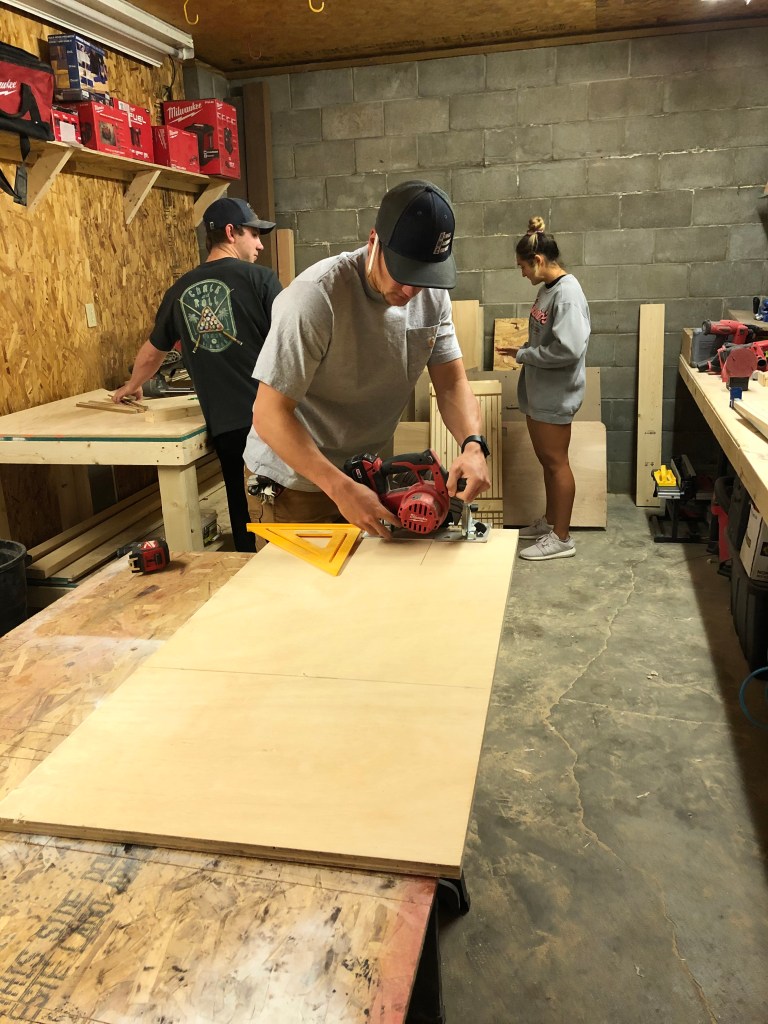
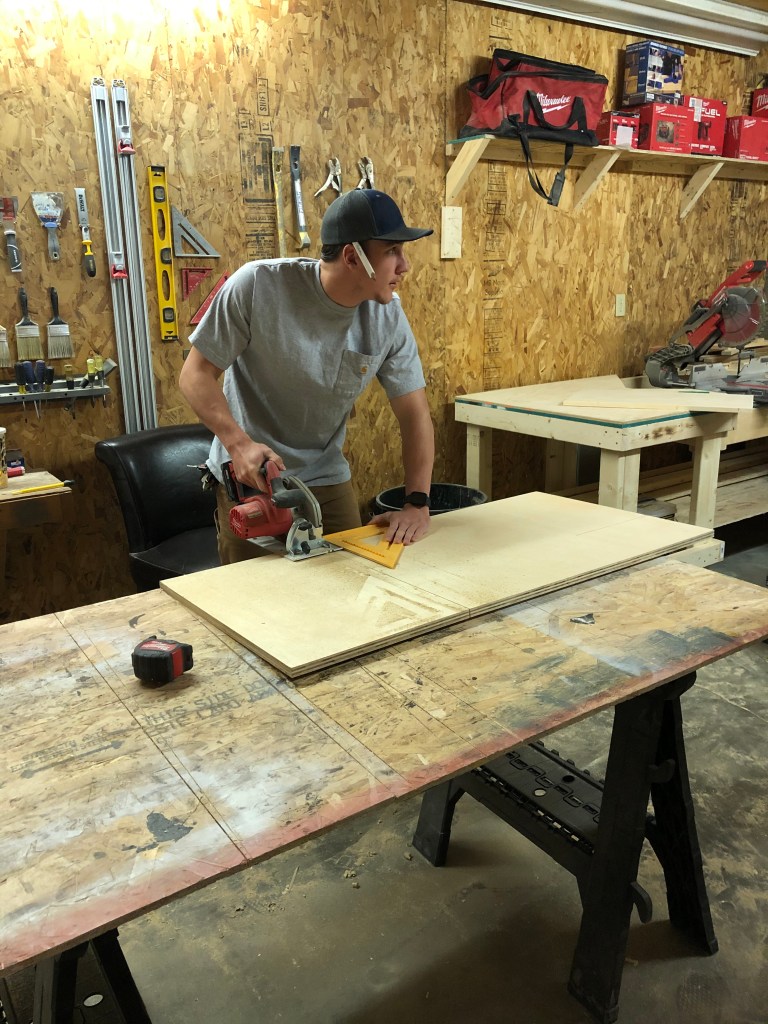
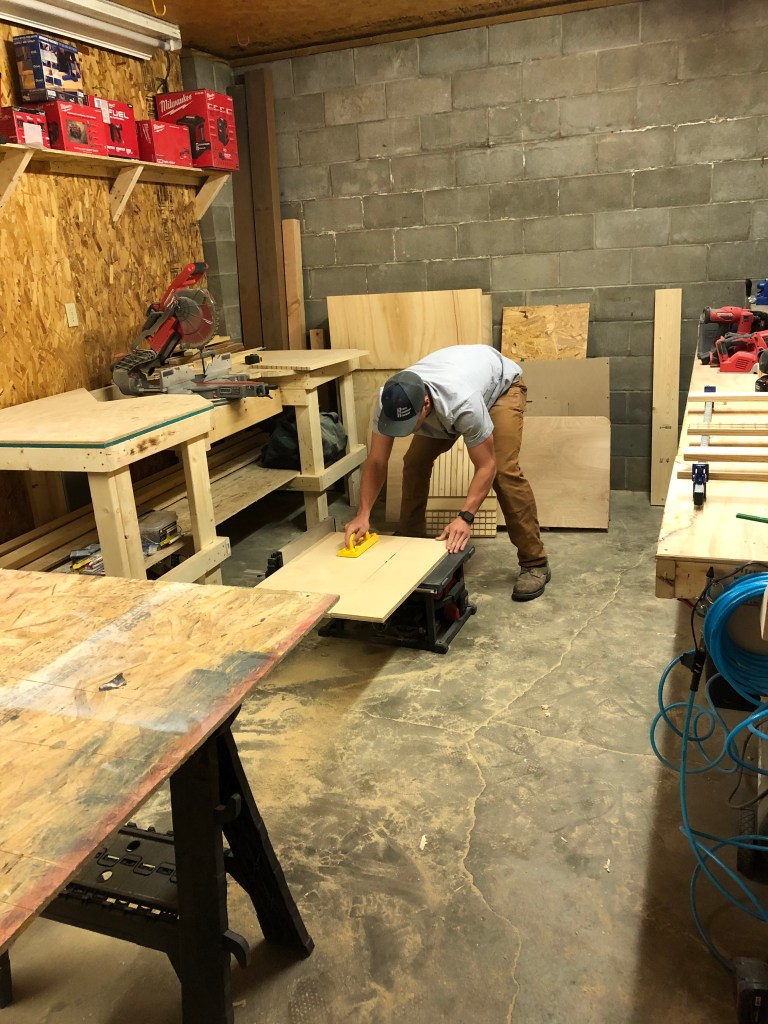
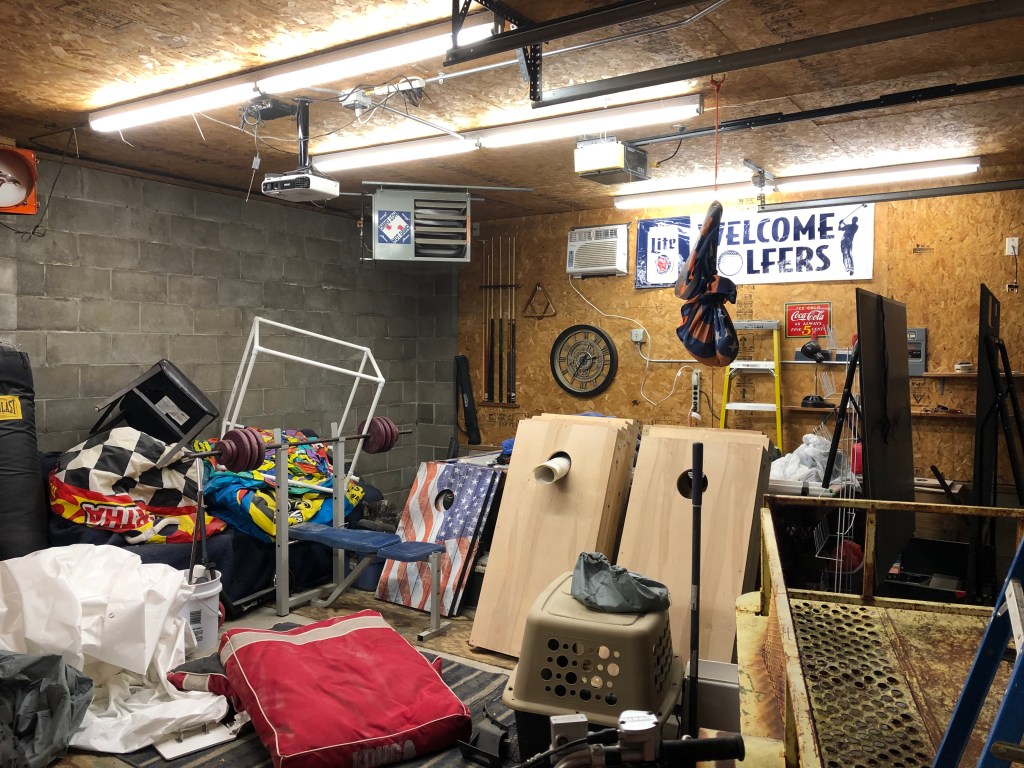
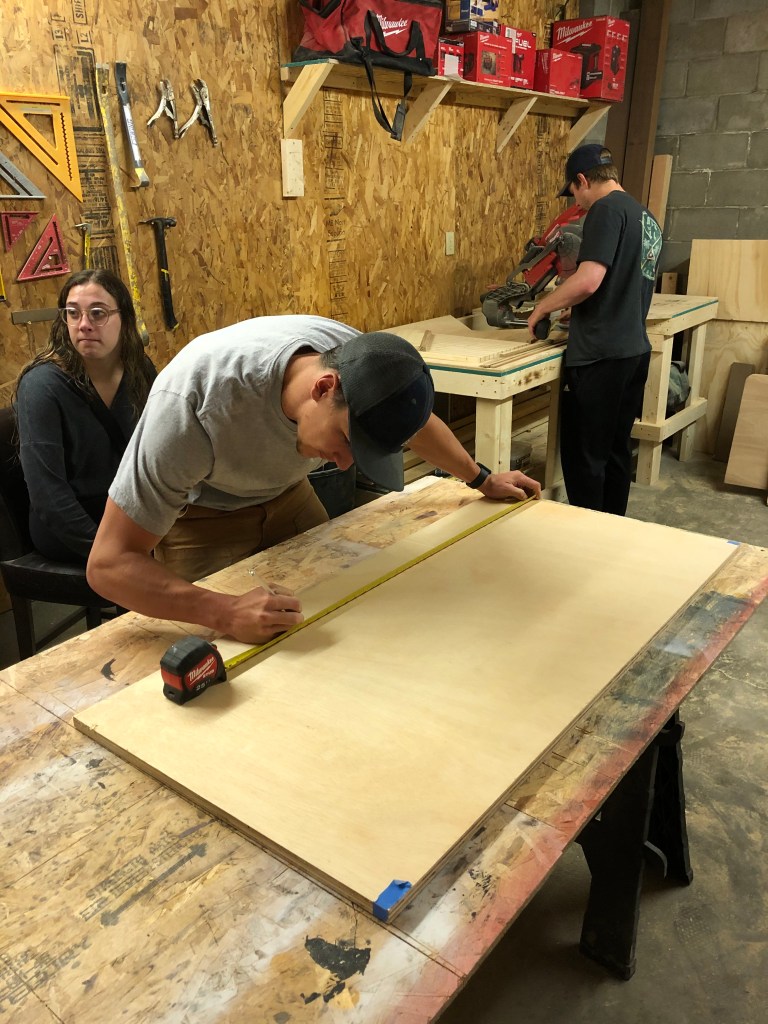
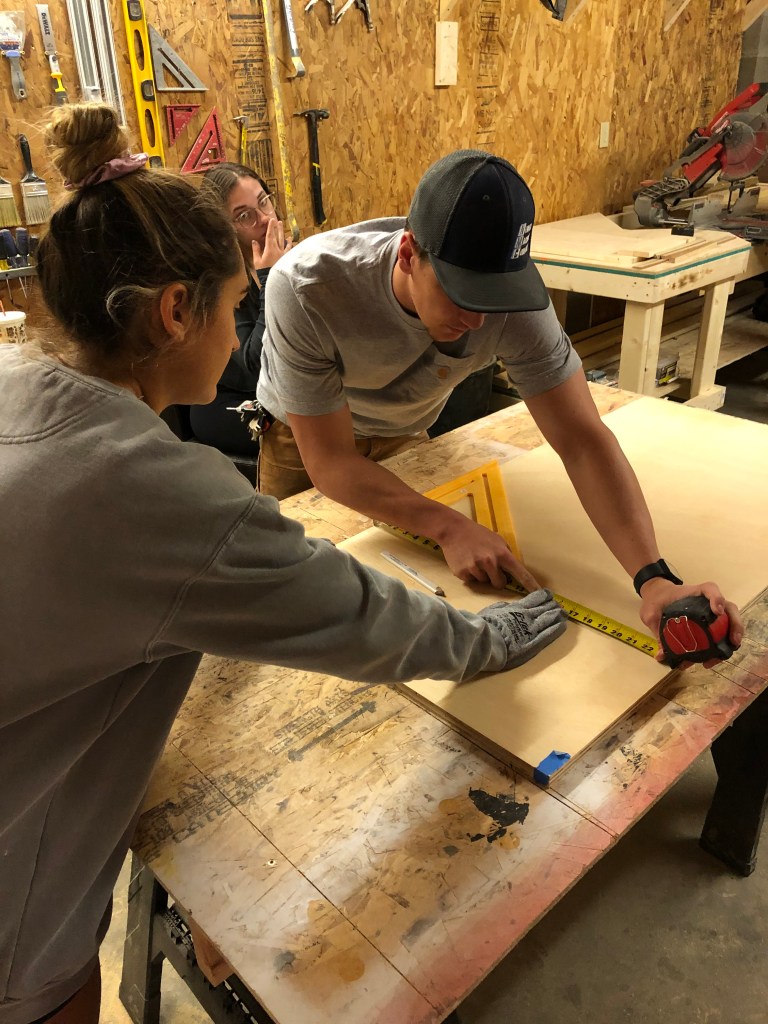
Construction management major, Seth Rinderknecht, doesn’t miss a beat with hands-on projects when schools close for the rapid-traveling COVID-19.


The senior from Cedar Rapids, Iowa is one of the members on the University of Nebraska-Omaha (UNO) soccer team. Despite his spring season being cut short due to the Coronavirus, Rinderknecht used the break to focus on his favorite hobby; building.


“This break is a blessing in disguise,” Rinderknecht said. “Soccer isn’t forever, and now that we are officially finished, I get to focus on what I want to do for the rest of my life.”


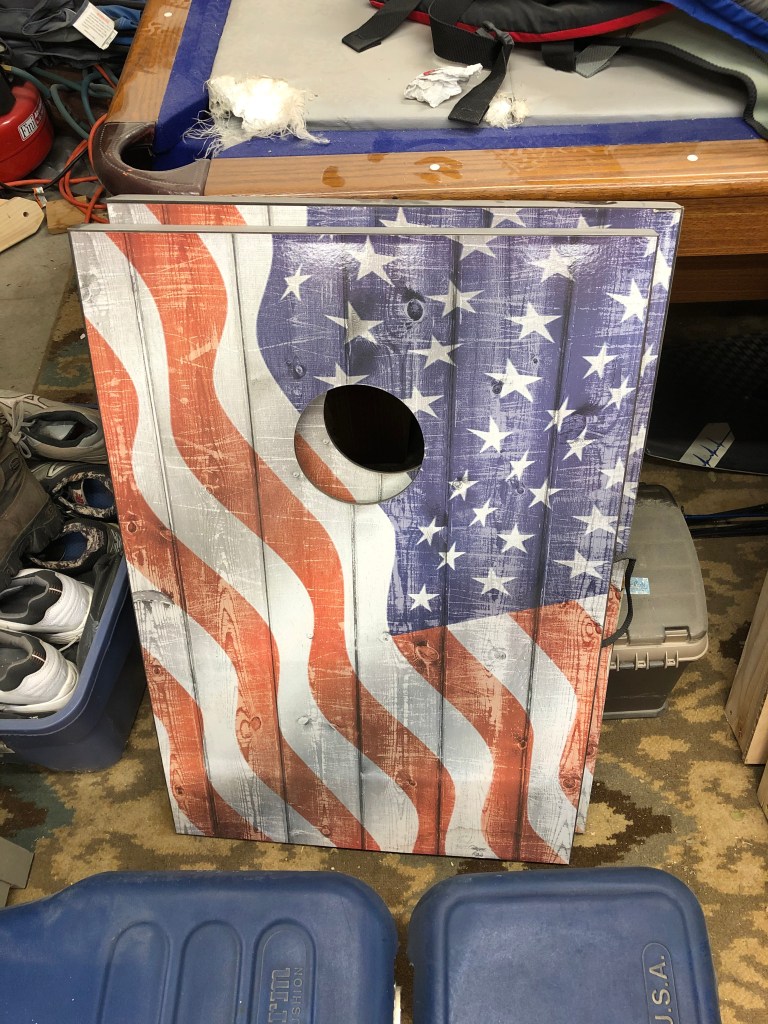
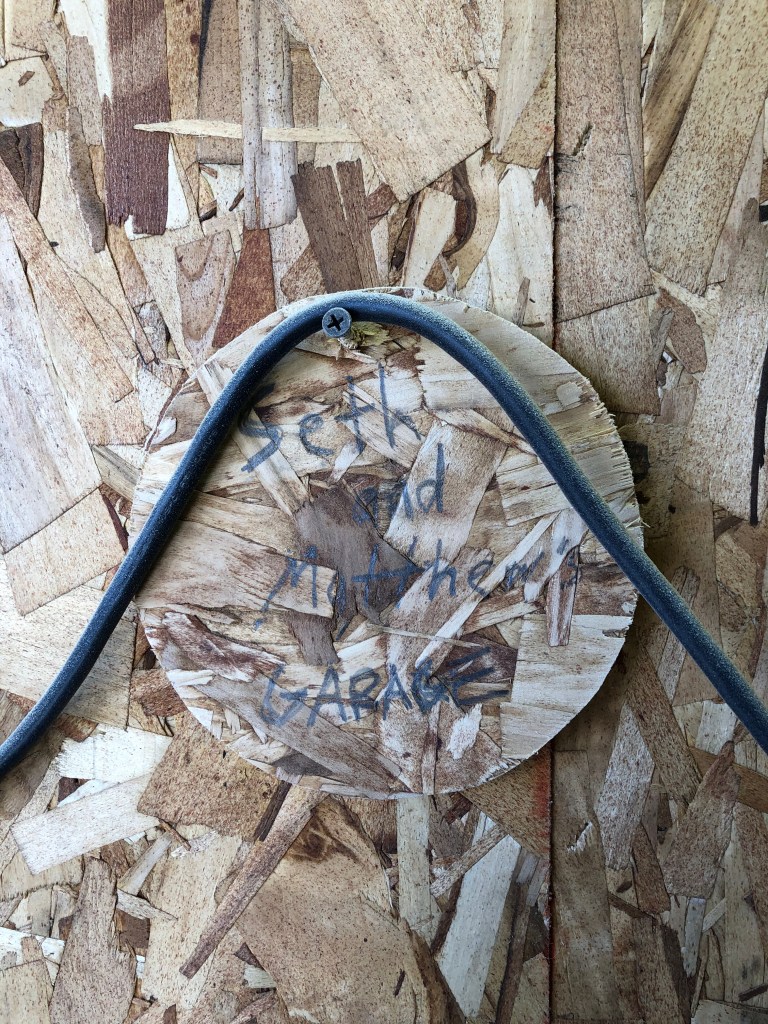
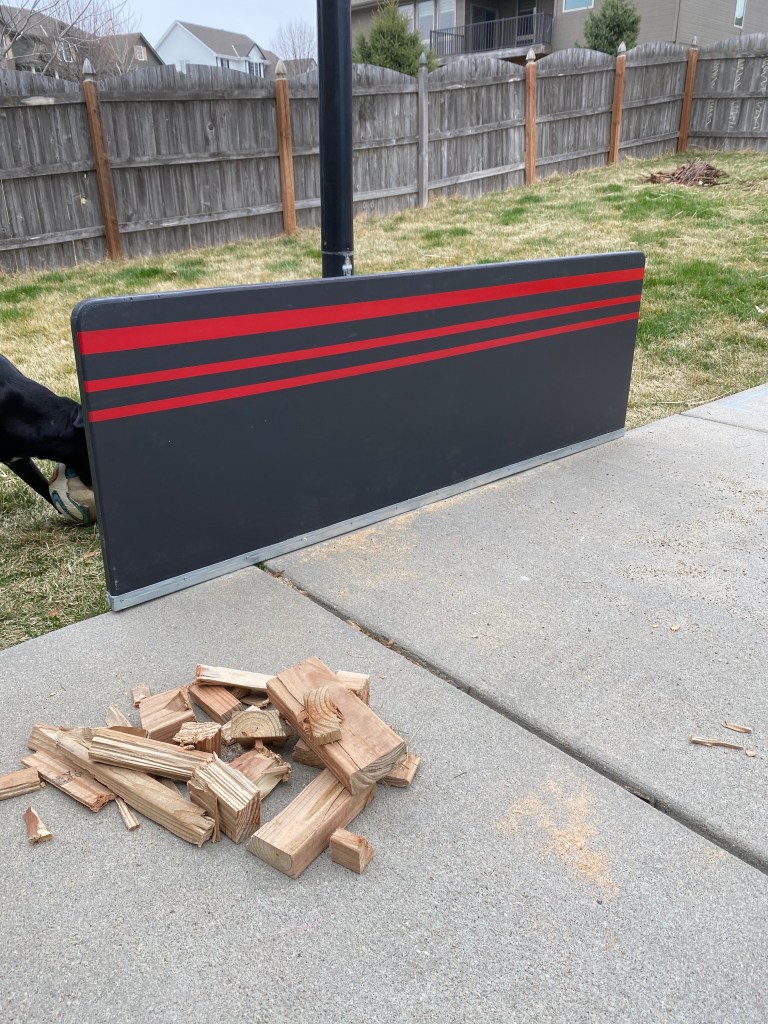
Rinderknecht and former teammate, Matthew Smith, borrowed a friend’s garage during the winter of 2018 to build a portable kick-back board for Tim Walters, head women’s soccer coach.


From then on, the two have built a bond inside the garage making anything from cornhole to dining room tables.


The defensive captain has built more than just tables in a garage, Rinderknecht has earned 8 awards during his time at UNO. 


“[Seth] is one of the best players that I have ever gotten the chance to coach,” Bob Warming, the men’s head soccer coach at UNO, said. “His legacy will be burned into this program forever.”


Before UNO, Rinderknecht was given a handful of small Division 1 scholarships.


“I chose Omaha because it was close but not too close to home,” Rinderknecht said. “When I was a junior in high school, the team had just gotten off of a championship season and that’s what I wanted to be a part of.”


Rinderknecht was so excited to get to work that he skipped his senior high school season to begin practicing with the Mavericks early. He wanted his game to be ahead of the other newcomers and it worked.
The senior has started every season at UNO.


“I am forever grateful for what Omaha has brought me,” Rinderknecht said. “They have built far more than just a great soccer player. I plan to stay here and build with Matthew for quite a while.”

Categories
Media Storytelling II

Photojournalism Recap

Over time the use of photos in journalism has increased drastically. The NY Times are a prime example. Traditional print in this decade has evolved to the use of photos to provide a visual component to them.

In this decade, photos have provided readers a way to grasp an idea or image to the story. Photos help readers put a face or place to a name.

The use of text alone is hard to find in the realm of print. Photos attract readers to not only view the text, but read it as well.

Stories can be seen as more attractive with a picture because the picture tells a story.

Charley Steed, professor at the University of Nebraska-Omaha, described the effectiveness of photos within stories. The idea of grabbing a photo is not as easy as a snap of your camera.

Steed shared the idea of how angles and lighting affect a photo. Photo composition, or framing it the right way, takes into account the foreground, middle ground and background when capturing a photo. Doing so provides depth and understanding on why something is where it is.

“Go for the shot you need,” Steed said. “Don’t go for the shot you want because the likelihood of getting the perfect shot is low.”

Steed also advised students to find the shot that their going to need in order to convey what is happening.

Knowing the story before they take their photos is something that Steed emphasized.

The different ways to set a picture up include micro and macro. Narrative perspective is another way to focus a photo.

“Think of it as telling a story through pictures,” Steed said. “Have a rising action, climax and conclusion.”

An important tip when capturing a photo is to make sure your camera or phone is charged. Bringing extra batteries is crucial in getting the best photos.

Categories
Media Storytelling II

Third School is the Charm

The University of Nebraska-Omaha (UNO) left fielder, Jack Lombardi, played against his former school, Creighton University on Saturday, March 7.

Lombardi has been allowed to play at a few of the top baseball colleges in the nation (Creighton University and Jefferson Junior College), but the UNO Mavericks have held him here.

Lombardi started his baseball career at UNO rival school, Creighton University. With the Bluejays, Lombardi struggled to see his dream become a reality.

As a freshman at Creighton, Lombardi played one inning.

“I was super frustrated,” Lombardi said. “I came to school to play baseball, but the coaches weren’t giving me the chance.”

He struggled to find the right move to make to fulfill his dream of becoming a major league baseball (MLB) player. After his first season with the Bluejays, Lombardi decided that Creighton wasn’t giving him the best shot at making it into the MLB so he transferred.

Jefferson Junior College was his first stop. Lombardi carried his team to the Junior College (JUCO) World Series where they lost in the second round.

“I thought I was ready for division 1 baseball when I committed to Creighton, but I wasn’t,” Lombardi said. “Jefferson was the perfect stepping stone.”

Junior college students are given two years to prepare for a University, and Lombardi did just that. 

“If I’m being honest,” Lombardi said. “I picked Omaha because it gave me the best scholarship.”

Although the money got Lombardi to UNO, the relationships he has made have kept him here. 

“I haven’t been at a school longer than 1 year,” Lombardi said. “It was so nice not having to start all over at the beginning of this year. The guys on my team and the friends I have made within the athletic community are keeping me here.”

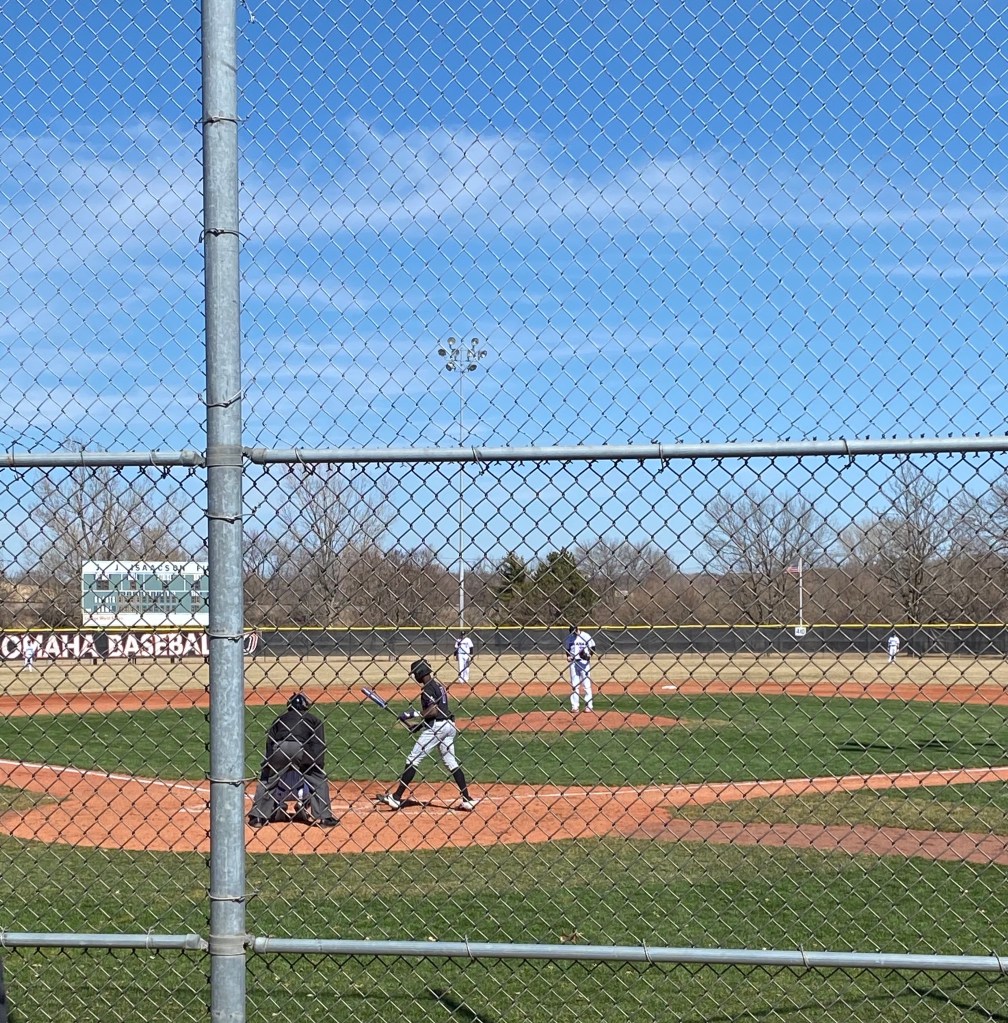
UNO’s Jack Lombardi up to bat during the first inning against Creighton University pitcher, Ryan Windham.
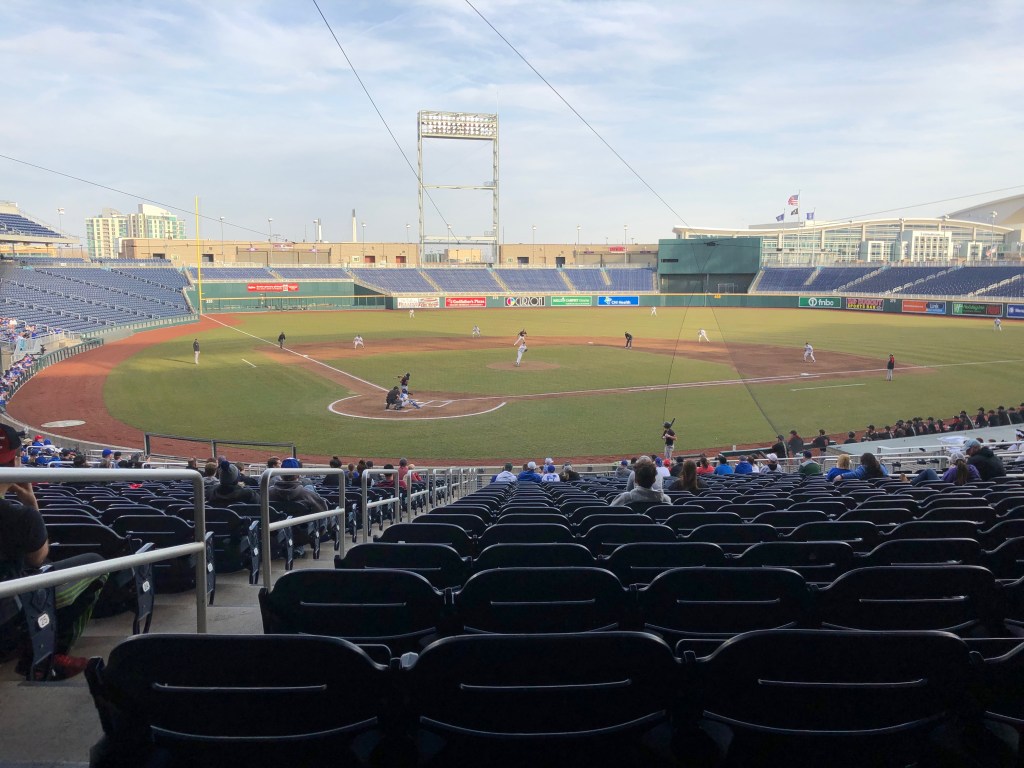
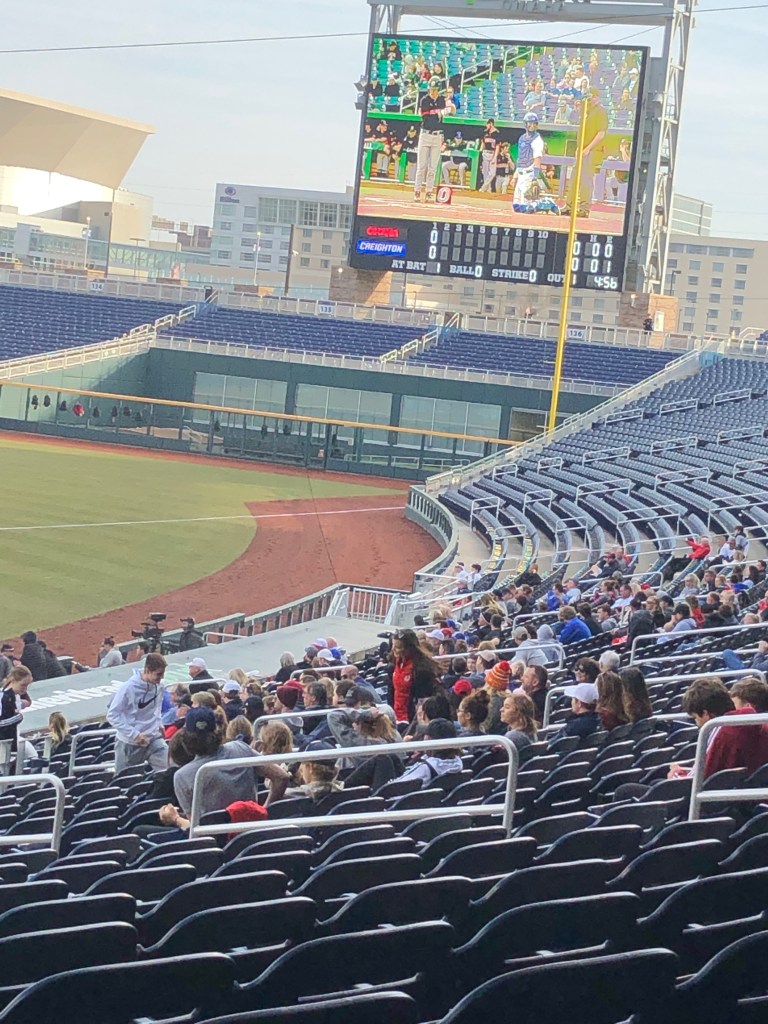
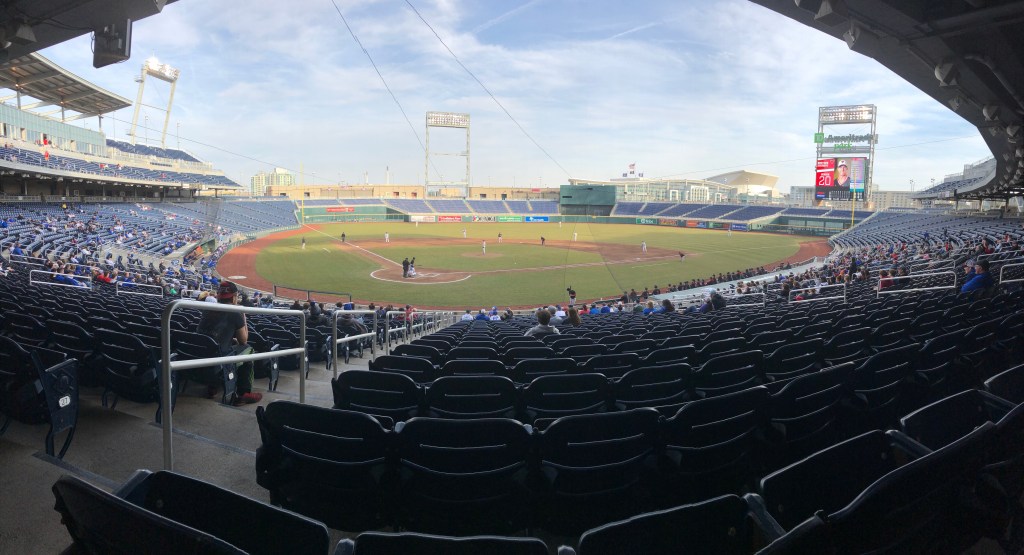
Fans scattered around TD Ameritrade Park for the battle between UNO and Creighton.
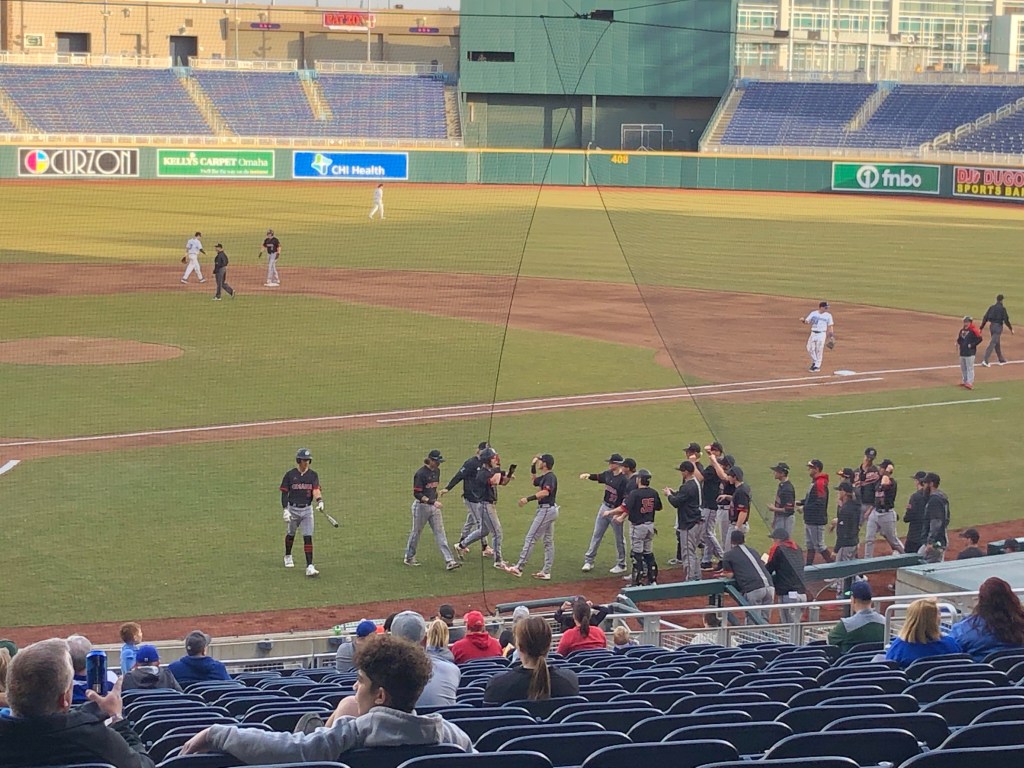
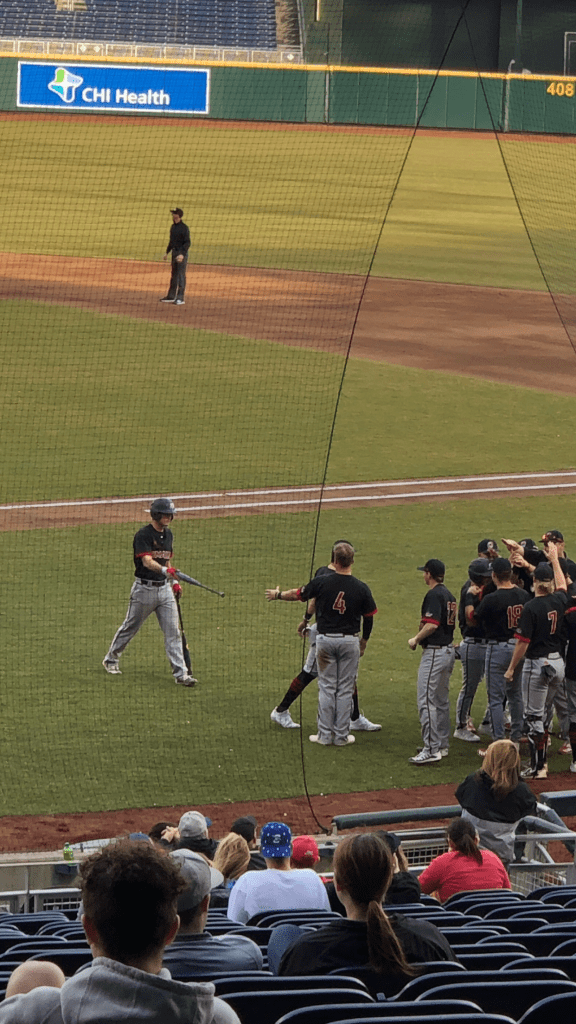
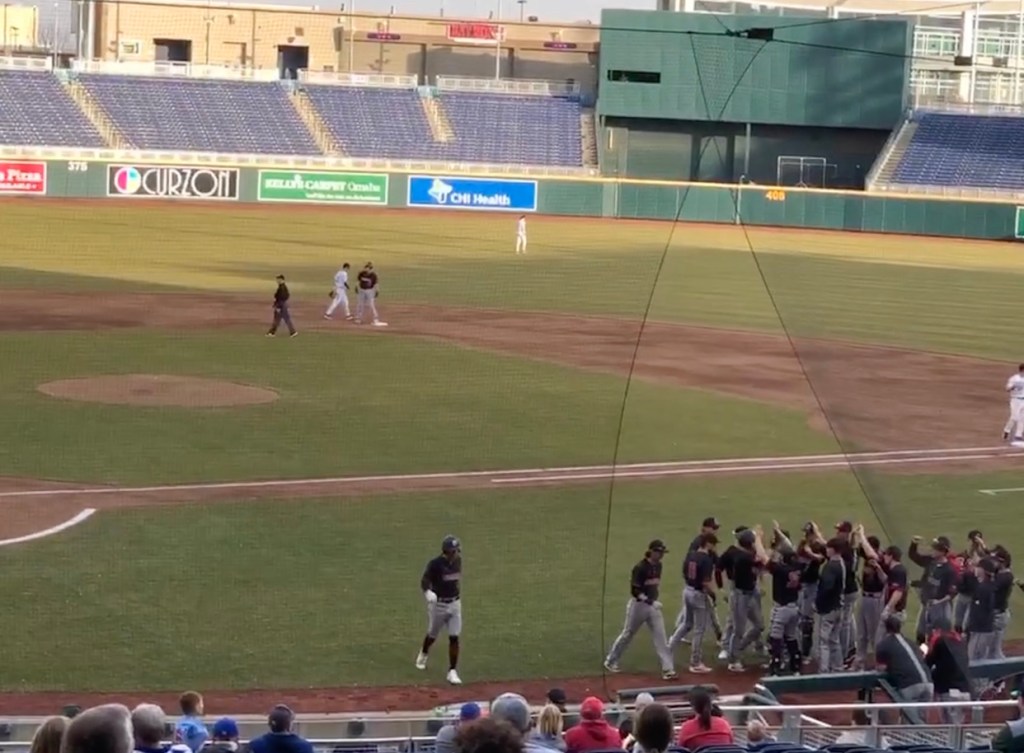
UNO baseball players charge from their dugout to celebrate their first run against their cross-town rival, Creighton.
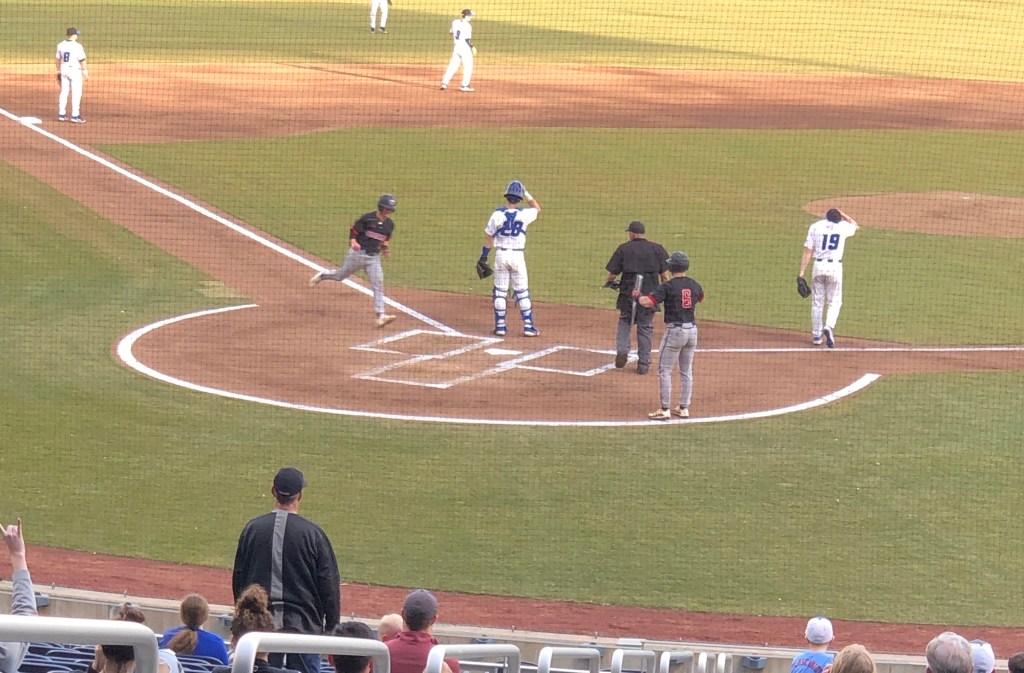
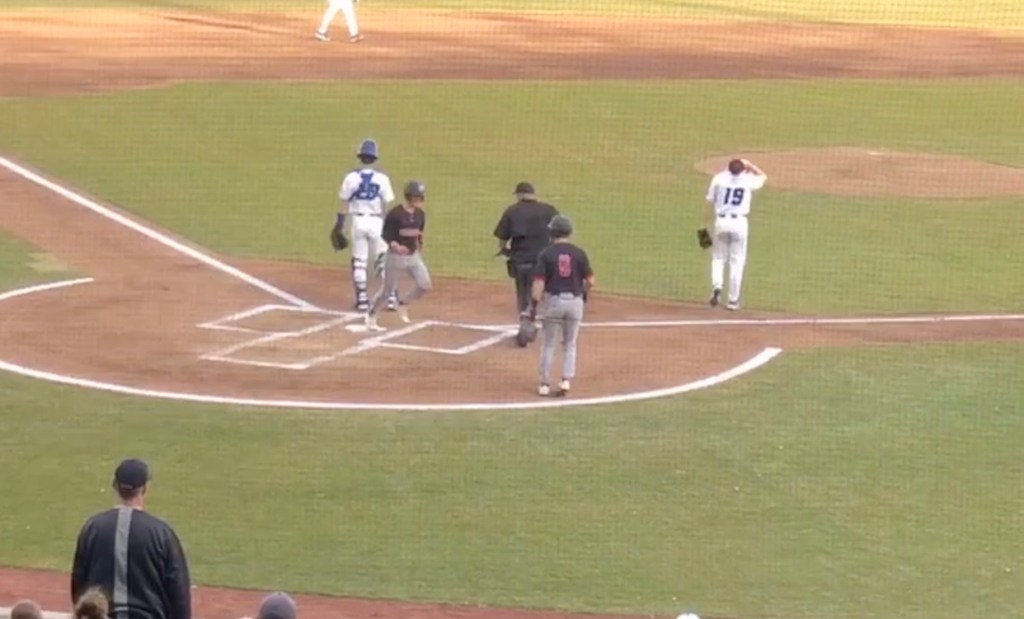
Lombardi runs towards home. He scored UNO’s fifth run during the second inning.
Lombardi touches home plate after adding to the Mavericks run that was started by Brett Bonar.
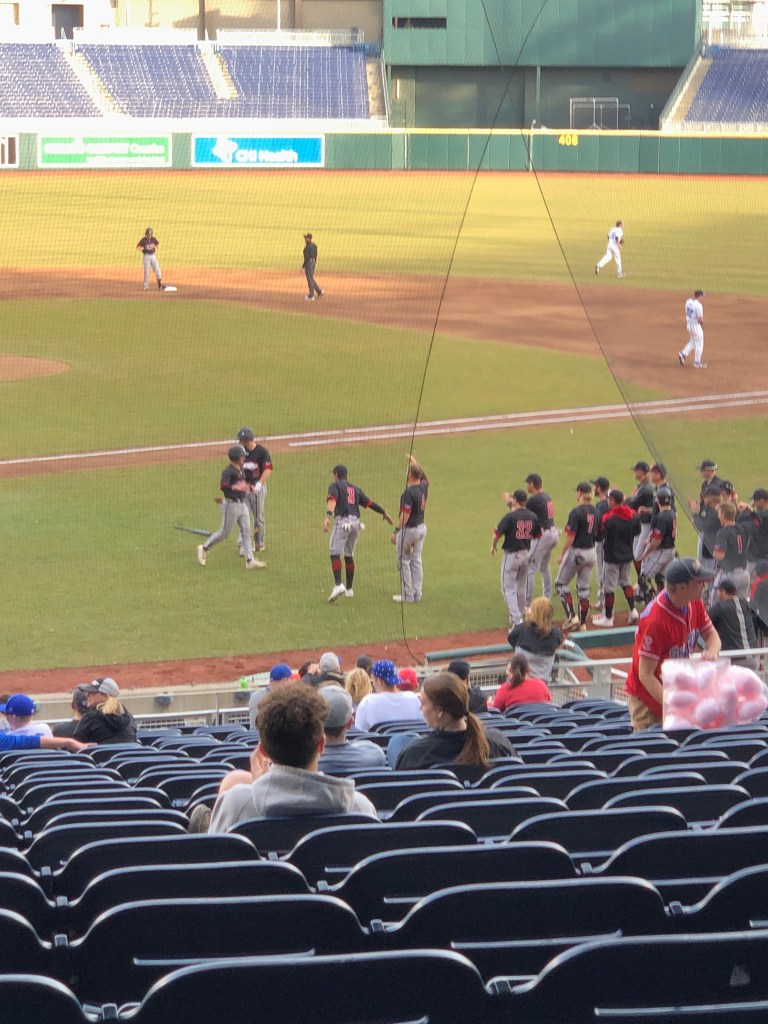
The Mavericks huddle around scoring runners, Harrison Denk and Garrett Kennedy, after increasing their lead, 6-0, in the third inning.
A common celebration technique by the Maverick baseball players.
The Mavericks celebrating their final run by Kiel Krumwiede in the fifth inning against the Creighton Bluejays.
The Mavericks beat the Bluejays on Saturday, March 7. Lombardi got the chance to play and beat his former team.
The Mavericks went 3-0 during their first home tournament. They beat the Portland Pilots 1-0 in their first game and 7-5 in their second game on Friday, March 6.
Design a site like this with WordPress.com
Get started